

Blog
- November 16, 2026
How Long Do Hearing Aids Last? Signs It’s Time to Replace Yours
Your hearing aid cuts out in the middle of a conversation. The charge that used to last all day is gone by dinner. You’ve changed the wax guard twice this week, and voices still sound thin and far away. Sooner or later, most hearing aid users end up asking the same thing: is this worth fixing, or is it time for a new pair?
The answer depends on how old your devices are, what’s going wrong, and whether your hearing has changed. Here’s how to sort it out.
The Typical Hearing Aid Lifespan
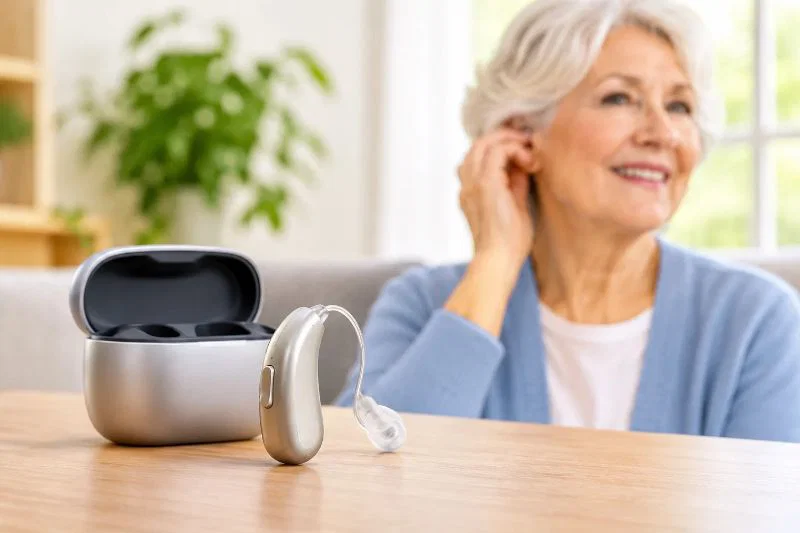
Most prescription hearing aids last about three to seven years. Many hearing care providers treat the five-year mark as a sensible time to start thinking about replacement, since internal parts slowly wear down with daily use.
Style plays a part. Devices that sit deeper in the ear canal deal with more moisture and earwax, so in-the-ear models often last closer to three to five years. Behind-the-ear and receiver-in-canal styles keep more of their electronics outside the ear.
Rechargeable hearing aids add one more factor. Their built-in batteries are designed for a limited number of charging cycles, and capacity slowly drops over the years. A battery that once got you through a long day may start running short well before the rest of the device is worn out. If you’re weighing the two power options, our comparison of rechargeable vs. battery hearing aids covers the tradeoffs.
It also helps to think about lifespan in two ways. There’s how long the device keeps working, and how long it keeps working well for you. A hearing aid can still turn on and produce sound while no longer matching your hearing or your daily needs.
What Wears Hearing Aids Out Faster
A few everyday things have the biggest effect on how long a hearing aid holds up:
- Moisture. Sweat, humidity and steam are hard on electronics. Atlanta summers don’t help, especially if you garden, walk outdoors or exercise while wearing your devices.
- Earwax and skin oils. Wax can block receivers and microphones and slowly work its way into openings. Some people naturally produce more wax or have oilier skin, which means more frequent cleaning.
- Drops and rough handling. Tile floors, sinks and curious pets cause more repairs than you might guess.
- Skipped maintenance. Old wax guards, worn domes and cracked tubing put extra strain on the parts that matter most.
Signs It May Be Time to Replace Your Hearing Aids
Watch for these patterns, especially once your devices are four or five years old:
- You need repairs again and again, sometimes for the same problem
- Sound is weak, crackly or distorted even after a good cleaning
- The battery or charge no longer lasts a full day, even after service
- The case is cracked, a door won’t latch, or buttons stick
- Your hearing has changed and the devices can’t be adjusted far enough to keep up
- You find yourself straining in places where your hearing aids used to help, like restaurants or family gatherings
- Your needs have changed, such as wanting easier phone streaming or rechargeable power because small batteries are hard to handle
- The manufacturer no longer supports your model with parts
One of these on its own doesn’t always mean you need new devices. Several at once usually does.
Repair or Replace?
Plenty of problems are fixable. Before deciding, it helps to compare where your hearing aids stand.
| Question | Repair is often worth it when… | Replacement may make more sense when… |
|---|---|---|
| How old are they? | They’re only a few years old | They’re five or more years old |
| Is the warranty active? | Yes, so many repairs may be covered | No, and the repair estimate is high |
| What’s wrong? | A clogged wax filter, worn tubing or a single failed part | Repeated breakdowns or parts that are no longer available |
| Has your hearing changed? | No, or only slightly | Yes, beyond what the devices can handle |
If your hearing aids aren’t working properly, our team can help identify the issue through hearing aid troubleshooting and recommend the next steps. If a repair is needed, we offer hearing aid repair services for most major brands, including devices purchased elsewhere.
Minor repairs can often be completed in our office, while more complex issues may require manufacturer assistance. We’ll explain the repair costs before any work begins.
What if only one hearing aid fails?
Most people with hearing loss in both ears wear two hearing aids that work as a team, sharing settings and sometimes streaming to each other. If one breaks after the warranty ends, repairing it is often the simplest route. When a pair is already several years old, though, it’s worth asking whether replacing just one would leave you with mismatched technology, and whether moving to a new pair is the better long-term value.
When you do upgrade, consider keeping your old hearing aids as a backup if they still work. A spare pair can carry you through a repair or a lost device instead of leaving you without hearing for days.
Habits That Help Hearing Aids Last Longer
A few minutes of care each day can add real time to your devices:
- Wipe them down every night with a soft, dry cloth to clear wax and oils before they harden.
- Change wax guards and domes on schedule instead of waiting for sound to fade.
- Store them in their case or charger, not loose on a nightstand where they can fall or be found by a pet.
- Keep them away from moisture. Take them out before showering, swimming or using hair spray, and consider a drying kit in humid months.
- Insert and remove them over a soft surface, like a bed or a towel, so a slip doesn’t mean a crack.
- Keep up with professional cleanings and check-ins, which catch small problems before they turn into big ones.
For step-by-step cleaning instructions, see our guide to caring for your hearing aids.
Getting a Professional Opinion
If you’re unsure whether your hearing aids have a few good years left, an updated hearing test is the place to start. Your hearing may have changed since your last fitting, and regular hearing evaluations show whether your devices still match what you need. We can also check how your hearing aids are performing and whether reprogramming, a repair or new technology makes the most sense. If you do move to new devices, a careful hearing aid fitting makes sure they’re set up correctly from day one.
Bring your current hearing aids, along with any notes on what’s been bothering you, and schedule a visit with The Hearing Center at Eye Consultants of Atlanta. We’ll give you an honest look at whether fixing or replacing is the better value for you.
Related Posts


Contact Info
- Monday – Thursday : 8:00 am – 4:30 pm Friday : 8:00 am – 4:00 pm