
Blog
- August 19, 2026
Rechargeable vs Battery Hearing Aids: Which Is Right for You?
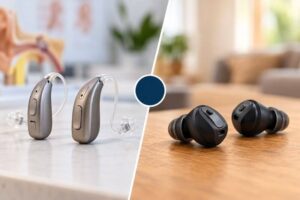
Choosing hearing aids involves more than selecting a style or brand. One important decision is how your hearing aids will get their power. Today, most hearing aids use either built in rechargeable batteries or traditional disposable batteries that you replace when they run out.
Both options can provide reliable hearing support. The better choice depends on your daily routine, comfort with small batteries, travel habits, charging access, and personal preferences.
If you are comparing rechargeable vs battery hearing aids, understanding how each option works can make the decision easier. Below, we look at the advantages, limitations, battery life, convenience, and other factors you should consider.
What Are Rechargeable Hearing Aids?
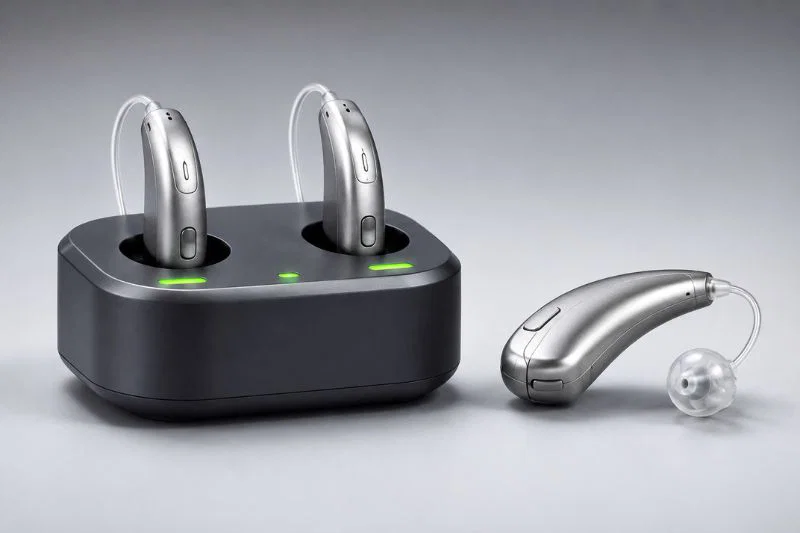
Rechargeable hearing aids have built in batteries that are designed to be charged instead of regularly removed and replaced. Many modern rechargeable hearing aids use lithium-ion battery technology.
At the end of the day, you typically place the hearing aids into a charging station. They charge while you sleep and are ready to use again the next morning.
Many people prefer rechargeable models because they eliminate the need to regularly buy, carry, and replace tiny disposable batteries. They can be especially convenient for people who wear their hearing aids throughout most of the day.
Benefits of Rechargeable Hearing Aids
Rechargeable hearing aids offer several advantages that can make everyday hearing care simpler.
- Easy daily routine: Instead of checking whether you have replacement batteries available, you can place your hearing aids in their charger each night. For many people, charging quickly becomes part of their bedtime routine.
- No small batteries to replace: Disposable hearing aid batteries can be difficult to handle. If you have arthritis, limited hand strength, vision difficulties, or problems with fine motor skills, changing a tiny battery may be frustrating. Rechargeable models remove this regular task.
- Less battery waste: Because you are not throwing away batteries every few days or weeks, rechargeable hearing aids can reduce the number of disposable batteries you use over time.
- No need to regularly purchase batteries: Although rechargeable hearing aids may have different upfront costs depending on the device, you do not need to continuously purchase disposable hearing aid batteries.
- Convenient for everyday use: For people who have a predictable daily routine and easy access to a charger, rechargeable hearing aids can be a very practical option.
Are There Any Drawbacks to Rechargeable Hearing Aids?
Rechargeable hearing aids also have a few limitations to consider.
The biggest consideration is charging. If you forget to charge your hearing aids overnight, you may have limited battery power the next day. You also need access to your charger and a suitable power source.
This can require some additional planning when traveling. You will need to remember your charging equipment along with your hearing aids and other personal items.
Rechargeable batteries can also lose capacity as they age. Depending on the hearing aid, battery servicing or replacement may eventually need to be handled by a hearing care professional or manufacturer rather than at home.
What Are Battery Operated Hearing Aids?
Battery operated hearing aids use small disposable batteries that can be removed and replaced by the wearer.
Traditional hearing aid batteries commonly use zinc air technology and are available in different sizes. The appropriate battery depends on the hearing aid model.
When the battery becomes low, you remove it and insert a new one. You do not need to wait for the hearing aid to charge, which can be helpful for people who prefer the ability to replace the power source immediately.
Benefits of Battery Hearing Aids
Although rechargeable technology has become increasingly common, disposable battery hearing aids can still be a practical choice for some users.
- Quick battery replacement: If the hearing aid battery dies, you can replace it with a fresh one and continue using the device. There is no need to connect the hearing aid to a charger and wait.
- Useful when traveling: Carrying spare batteries can provide flexibility when you are away from home or do not have reliable access to electricity.
- No nightly charging routine: Some people simply prefer not having another device that needs to be charged every night. With disposable batteries, you only need to change the battery when its power is depleted.
- Easy to keep backup power: A small package of replacement batteries can be kept in a purse, travel bag, desk, or other convenient location.
What Are the Drawbacks of Disposable Batteries?
One of the main disadvantages is the need to handle very small batteries.
Opening the hearing aid battery compartment, removing the old battery, and inserting a new one may be difficult for people with limited dexterity or vision problems.
You also need to make sure replacement batteries are always available. If your hearing aid battery dies and you do not have a spare, you may not be able to use the device until you get another battery.
There is also an ongoing cost associated with purchasing replacement batteries. Used batteries need to be properly disposed of as well.
Rechargeable vs Battery Hearing Aids: Key Differences
Here is a simple comparison of the two options:
| Feature | Rechargeable Hearing Aids | Battery Hearing Aids |
|---|---|---|
| Power source | Built in rechargeable battery | Replaceable disposable battery |
| Daily routine | Usually charge regularly | Replace battery when depleted |
| Small battery handling | Not normally required | Required |
| Backup power | Requires charging access or compatible charging options | Spare batteries can be carried |
| Travel | Charger usually needed | Extra batteries can be packed |
| Battery purchases | No regular disposable battery purchases | Batteries purchased regularly |
| Waste | Fewer disposable batteries | Used batteries require disposal |
| Convenience | Ideal for a regular charging routine | Ideal for quick battery replacement |
Neither option is automatically better for everyone. Your lifestyle can play a major role in determining which is more convenient.
How Long Do Hearing Aid Batteries Last?
Battery life varies considerably based on the hearing aid model, battery size, device settings, wireless features, streaming habits, and daily usage.
Many rechargeable hearing aids are designed to provide enough power for a typical day before they need to be recharged. However, frequent audio streaming or heavy use of wireless features can affect how long a charge lasts.
Disposable hearing aid batteries may last several days or longer depending on their size and how the hearing aids are used.
Instead of choosing a hearing aid based only on advertised battery life, consider how you actually plan to use the device. Your hearing care professional can explain expected battery performance for the specific hearing aids you are considering.
How to Choose Between Rechargeable and Battery Hearing Aids
Rather than focusing on which battery type is considered newer, think about which one fits your everyday life.
Consider questions such as:
Do you want to avoid changing small batteries?
Will you remember to charge your hearing aids regularly?
Do you frequently travel or spend time away from electrical outlets?
Do you use Bluetooth streaming often?
Would carrying spare batteries make you feel more comfortable?
Do you have difficulty seeing or handling small objects?
How many hours per day do you expect to wear your hearing aids?
Your answers can help narrow down which option may be more practical.
It is also important to remember that battery type is only one part of choosing hearing aids. Your level of hearing loss, listening environments, lifestyle, comfort, technology needs, and hearing goals should all be considered.
Rechargeable or Battery Hearing Aids: Which Is Better?
For many people, rechargeable hearing aids offer excellent convenience. They can be particularly appealing if you want a simple nightly charging routine and prefer not to handle disposable batteries.
Traditional battery hearing aids may be a better fit if you want the flexibility to replace your power source immediately or frequently spend time in places where charging could be inconvenient.
Neither choice is right for everyone. The best hearing aid is the one that meets your hearing needs while fitting comfortably into your daily life.
Find the Right Hearing Aids for Your Lifestyle
Choosing between rechargeable and battery hearing aids can feel like a small decision, but it can have a noticeable impact on how convenient your hearing aids are to use every day.
At Hearing Center at Eye Consultants of Atlanta, we can help you compare hearing aid options based on your hearing needs, lifestyle, technology preferences, and daily routine. Our team can explain the differences between rechargeable and battery powered models and help you understand which features may be most useful for you.
If you are considering new hearing aids or want professional guidance on your options, schedule an appointment with Hearing Center at Eye Consultants of Atlanta and take the next step toward finding hearing technology that works for your everyday life.
Related Posts


Contact Info
- Monday – Thursday : 8:00 am – 4:30 pm Friday : 8:00 am – 4:00 pm