
Blog
- August 25, 2026
AI Hearing Aids: How Artificial Intelligence Is Changing Hearing Care
Artificial intelligence is becoming part of many technologies we use every day, and hearing aids are no exception. Today, some modern hearing aids use AI and advanced processing to help people hear more comfortably in different listening environments.
Traditional hearing aids primarily focused on making sounds louder. Modern devices can do much more. Depending on the hearing aid, technology can help identify different listening environments, reduce unwanted background noise, improve access to speech, and automatically adjust certain settings.
For people with hearing loss, these advances can make hearing aids easier to use throughout the day. Instead of constantly thinking about changing programs, users may be able to move from a quiet home to a busy restaurant or outdoor environment while their hearing aids automatically adapt.
But what exactly are AI hearing aids, and how does artificial intelligence improve the hearing experience? Here is what you should know.
What Are AI Hearing Aids?
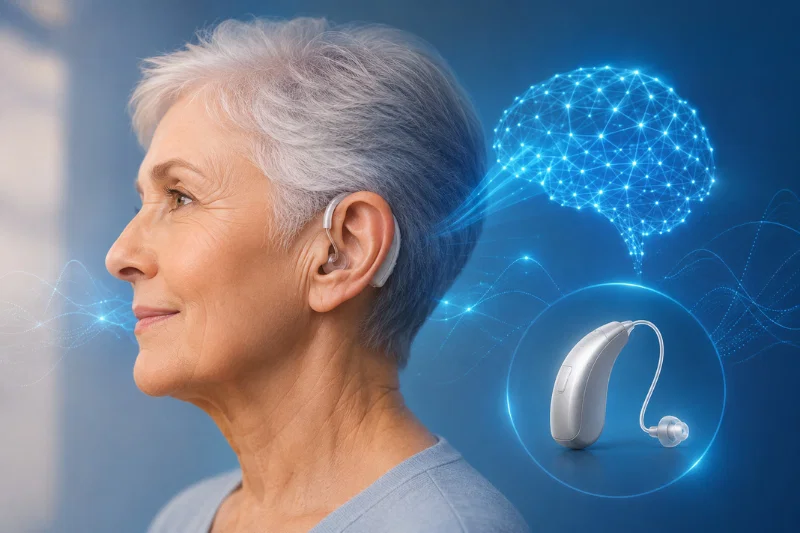
AI hearing aids are hearing devices that use advanced algorithms, machine learning, or related technologies to process sound and make intelligent adjustments.
A hearing aid receives sound through its microphones, processes that sound, and delivers the adjusted signal to the ear. AI can help make this process more responsive to what is happening around the wearer.
Depending on the device, AI technology may analyze factors such as:
- Speech
- Background noise
- Music
- Wind
- Quiet environments
- Changing sound levels
The hearing aid can then adjust how it processes sound based on the environment.
Not every hearing aid marketed as “smart” uses artificial intelligence in exactly the same way. Features and capabilities vary between manufacturers and models. An audiologist can explain which technologies may be useful based on your hearing needs.
How Does AI Work in Hearing Aids?
AI hearing aids use sophisticated software to analyze sounds around you. Some systems are trained using large collections of different sound environments so they can recognize patterns associated with speech, noise, music, and other sounds.
Imagine walking from your quiet living room into a busy restaurant.
At home, your hearing aids may provide a balanced listening experience for a conversation with a family member. At the restaurant, there may suddenly be conversations, dishes, music, and other competing sounds.
A modern hearing aid may recognize that the listening environment has changed and automatically modify its sound processing.
These adjustments happen quickly and may require little or no action from the wearer.
The goal is not to eliminate every unwanted sound. Background sounds are a normal part of hearing. Instead, modern processing aims to provide a more useful and comfortable listening experience based on the individual’s hearing needs.
How AI Is Changing Hearing Care
Artificial intelligence is helping hearing aid technology become more adaptive and personalized. Here are some of the areas where AI and advanced digital processing are making a difference.
1. Better Management of Background Noise
One of the most common concerns among people with hearing loss is difficulty understanding conversations when there is background noise.
Restaurants, family gatherings, airports, stores, and social events can all create challenging listening situations.
Modern hearing aids may use advanced noise management and directional microphone technology to analyze incoming sounds. Some devices can identify speech and competing noise and adjust their processing accordingly.
This may help make important sounds easier to access without simply making everything louder.
2. Automatic Adjustments
Older hearing aids often required users to manually switch between listening programs for different environments.
Modern devices can make many adjustments automatically.
For example, a hearing aid may recognize whether you are in a quiet room, listening to music, walking outside, or having a conversation in a noisy environment. The device can then modify certain settings based on the situation.
Automatic adjustments can be especially helpful for people who move between different listening environments throughout the day.
3. More Personalized Hearing
Hearing loss is different for every person.
Two people with similar hearing test results may still have different listening preferences, lifestyles, and communication needs.
Modern hearing aids can be professionally programmed according to an individual’s hearing evaluation. Some devices also include adaptive features that respond to listening situations or user preferences over time.
However, AI does not replace professional hearing aid programming. The technology works best when the hearing aids are selected, fitted, and adjusted according to the individual’s hearing needs.
4. Improved Speech Understanding
For many people with hearing loss, hearing sound is only part of the challenge. Understanding speech clearly can be especially difficult when several sounds are competing for attention.
Advanced hearing aids use technologies such as directional microphones, noise reduction, and sophisticated sound processing to help manage these situations.
Some newer systems use AI based approaches to help distinguish speech patterns from surrounding noise.
Results vary depending on the person’s hearing loss, listening environment, hearing aid technology, and other factors. No hearing aid can guarantee perfect speech understanding in every situation.
Other Smart Features Available in Modern Hearing Aids
Artificial intelligence is only one part of the technology found in today’s hearing aids. Depending on the model, modern devices may offer several additional features.
Bluetooth Connectivity
Many hearing aids can connect wirelessly to compatible smartphones and other devices. This may allow users to stream phone calls, music, podcasts, videos, and other audio directly through their hearing aids.
Health and Activity Features
Certain hearing aids may include sensors or features designed to track aspects of physical activity or device use. The available features vary widely, so it is important to understand what a specific device actually offers before choosing hearing aids based on additional technology.
Smartphone Apps
Many hearing aid manufacturers offer companion apps that allow users to control certain hearing aid features. Depending on the device, an app may allow you to adjust volume, change programs, check battery status, or access other settings.
Rechargeable Batteries
Rechargeable hearing aids have become a popular option for people who prefer not to regularly replace small disposable batteries. Users can typically place their hearing aids in a charger when they are not being worn, depending on the manufacturer’s recommendations.
Can AI Hearing Aids Restore Normal Hearing?
No. Hearing aids, including those using AI, do not restore natural hearing or cure hearing loss.
Instead, hearing aids are designed to improve access to sounds based on an individual’s hearing needs.
AI can help hearing aids process complex listening environments, but it cannot completely remove background noise or guarantee that every conversation will be perfectly clear. Setting realistic expectations is an important part of successful hearing care.
A professional hearing evaluation can help determine the type and degree of hearing loss and whether hearing aids may be appropriate.
Are AI Hearing Aids Right for Everyone?
Not necessarily.
The newest or most technologically advanced hearing aid is not automatically the best choice for every person.
The right hearing aid depends on several factors, including:
- Type and degree of hearing loss
- Lifestyle
- Listening environments
- Communication needs
- Comfort and dexterity
- Technology preferences
- Budget
Someone who regularly attends meetings, restaurants, social events, or other challenging listening situations may value advanced sound processing. Another person may have simpler listening needs and may not require every available feature.
This is why hearing aid selection should focus on the person rather than the technology alone.
Why a Professional Hearing Aid Fitting Still Matters?
As hearing aids become smarter, professional hearing care remains important.
Even an advanced hearing aid needs to be appropriately selected and programmed for the person wearing it.
A professional hearing aid fitting may include programming the devices according to your hearing needs, checking their physical fit, reviewing features, and making adjustments based on your experience.
Follow up visits can also be important. Your audiologist can fine tune the devices as you become accustomed to them and as your listening needs change.
AI can make hearing aids more adaptive, but technology and professional care work together.
What Is the Future of AI in Hearing Care?
AI technology continues to develop rapidly. Future hearing aids may become even better at analyzing complex sound environments, adapting to individual preferences, and connecting with other devices.
We may also see improvements in speech processing, wireless connectivity, personalization, remote support, and health related features.
However, the goal of hearing technology will remain the same: helping people communicate and participate more comfortably in everyday life.
For patients, the most useful advancement is not necessarily the feature with the most impressive name. It is the technology that meaningfully supports their individual hearing needs.
Take the Next Step Toward Better Hearing
AI is helping make modern hearing aids smarter, more automatic, and more adaptable to everyday listening situations. Features such as advanced sound processing, background noise management, automatic environmental adjustments, and wireless connectivity can provide valuable support for people with hearing loss.
But technology is only one part of better hearing. Choosing the right hearing aids begins with understanding your hearing.
If you are noticing changes in your hearing or want to learn more about modern hearing aid options, The Hearing Center at Eye Consultants of Atlanta can help. Our hearing professionals can evaluate your hearing, discuss your listening needs, and help you explore hearing technology that fits your lifestyle.
Schedule a hearing evaluation today and discover which hearing solutions may be right for you.
Related Posts

Contact Info
- Monday – Thursday : 8:00 am – 4:30 pm Friday : 8:00 am – 4:00 pm