
Blog
- October 5, 2026
Hearing Aids vs Hearing Amplifiers: What Is the Difference?
If you have trouble following conversations, hearing the television, or understanding people in noisy places, you may start looking for a device that can help. During your search, you will probably come across both hearing aids and hearing amplifiers.
They may look similar, and both can make sounds louder. However, they are designed for very different purposes.
The main difference is simple: hearing aids are medical devices designed to help people with hearing loss, while personal hearing amplifiers are generally intended to make certain sounds louder for people with normal hearing.
Understanding this difference can help you choose the right type of hearing support and avoid spending money on a device that does not meet your needs.
What Is a Hearing Aid?
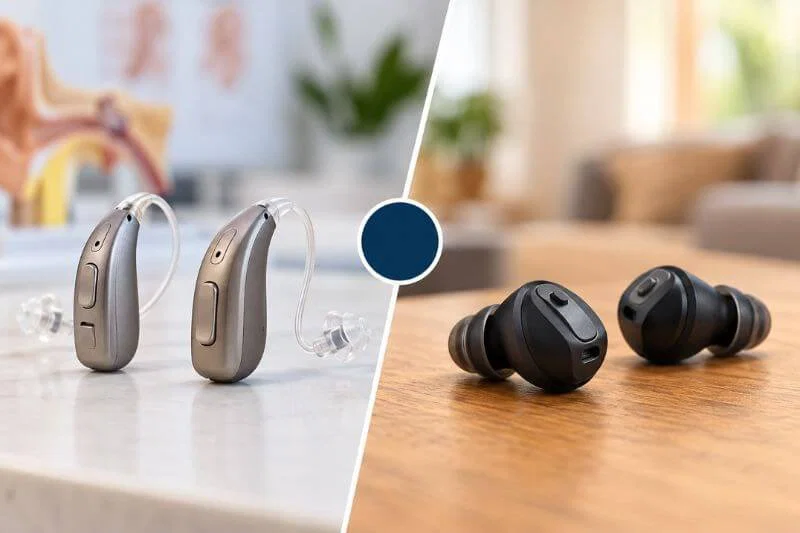
A hearing aid is a small electronic medical device worn in or behind the ear. It is specifically designed to help people with hearing loss hear and understand sounds more clearly.
According to the U.S. Food and Drug Administration (FDA), hearing aids are medical devices intended to compensate for impaired hearing.
Modern hearing aids do much more than simply increase volume. Digital hearing aids can process sound and be programmed to provide different amounts of amplification at different frequencies. This allows the device to address an individual’s hearing needs rather than making every sound equally loud.
Depending on the model, hearing aids may also offer features such as:
- Directional microphones
- Background noise management
- Rechargeable batteries
- Bluetooth connectivity
- Multiple listening programs
- Feedback reduction
- Smartphone controls
The right features depend on your hearing loss, lifestyle, listening environments, and personal preferences.
What Is a Hearing Amplifier?
A hearing amplifier, often called a personal sound amplification product (PSAP), is a consumer electronic product that makes environmental sounds louder.
Unlike hearing aids, PSAPs are not intended to treat or compensate for hearing loss. The FDA explains that these products are designed for people with normal hearing who want to amplify sounds in certain situations.
For example, someone with normal hearing might use a personal sound amplifier for:
- Birdwatching
- Listening to distant sounds
- Certain recreational activities
- Hearing a distant speaker more clearly
This distinction is important. A device being able to amplify sound does not automatically make it a hearing aid.
Hearing Aids vs Hearing Amplifiers: What Is the Main Difference?
The biggest difference is their intended purpose.
A hearing aid is designed for someone who has hearing loss. A personal hearing amplifier is designed to make certain sounds louder for someone who does not have hearing loss.
Here is a simple comparison:
| Feature | Hearing Aids | Hearing Amplifiers |
|---|---|---|
| Designed for hearing loss | Yes | No |
| Medical device | Yes | No |
| Customized to hearing needs | Can be | Usually limited |
| Sound processing | Advanced digital processing available | Primarily amplification |
| Professional fitting available | Yes | Usually no |
| Intended for everyday hearing support | Yes | No |
| FDA regulated as a medical device | Yes | No |
Although both devices amplify sound, they should not be considered interchangeable.
Do Hearing Amplifiers Work Like Hearing Aids?
Not exactly.
A basic amplifier may increase the volume of many sounds around you. This can make some sounds easier to hear, but it may also make unwanted sounds louder.
Hearing loss is often more complicated than simply needing everything to be louder.
For example, you might hear low-pitched sounds fairly well but struggle with higher-pitched speech sounds. A properly selected and programmed hearing aid can provide different amplification across frequencies based on your hearing needs.
Digital hearing aids can also be adjusted for different listening situations, giving hearing care professionals greater flexibility in matching amplification to the user’s hearing loss.
This is one reason a hearing evaluation can be valuable before deciding which solution is right for you.
Are Hearing Amplifiers Good for Hearing Loss?
Personal sound amplification products are not intended to compensate for hearing loss.
If you regularly have difficulty understanding conversations, ask people to repeat themselves, turn the television louder than others prefer, or struggle to hear in groups, it may be better to have your hearing evaluated rather than relying on an amplifier.
A hearing evaluation can determine whether hearing loss is present and, if so, identify its type and degree.
It can also help rule out other reasons you may not be hearing well.
For example, hearing difficulty can sometimes be related to earwax buildup or another medical condition that may need appropriate care. NIDCD recommends consulting a qualified health professional when you have concerns about hearing loss.
What About Over-the-Counter Hearing Aids?
Over-the-counter hearing aids can sometimes cause confusion because they can be purchased without visiting a hearing professional.
However, an OTC hearing aid is still a hearing aid, not simply a hearing amplifier.
FDA-regulated OTC hearing aids are intended for adults age 18 and older who perceive that they have mild to moderate hearing loss. They can be purchased directly without a medical exam, prescription, or professional fitting.
Personal sound amplification products are different. They are intended for people without hearing loss who want additional amplification in specific situations.
If you are unsure about the severity or cause of your hearing difficulty, a professional hearing evaluation can provide more information before you choose a device.
Why Is a Professional Hearing Evaluation Important?
You cannot always tell how much hearing loss you have based only on how loud sounds seem.
A comprehensive hearing evaluation can help identify:
- Whether hearing loss is present
- The degree of hearing loss
- Which frequencies are affected
- How well you understand speech
- Whether one ear is different from the other
- Whether further medical evaluation may be appropriate
An audiologist has specialized training to test hearing, identify the type and degree of hearing loss, and help determine which hearing devices may be appropriate.
This information can help you make a more informed decision instead of choosing a device based only on price, appearance, or advertising.
Signs You Should See a Hearing Professional
Consider scheduling a hearing evaluation if you:
- Frequently ask people to repeat themselves
- Have difficulty understanding speech in restaurants or groups
- Feel that people are mumbling
- Turn up the TV or radio more than others prefer
- Have trouble following conversations on the phone
- Struggle to understand higher-pitched voices
- Notice that hearing is different between your ears
- Feel that hearing difficulty is affecting your daily life
Certain symptoms deserve more immediate medical attention. These can include sudden or rapidly worsening hearing loss, ear pain, drainage from the ear, significant dizziness with hearing loss, or hearing loss or tinnitus mainly affecting one ear.
Which Is Better: A Hearing Aid or Hearing Amplifier?
Neither device is automatically “better.” The right choice depends on why you need amplification.
If you have normal hearing and simply want to make distant or quiet sounds louder during a specific activity, a personal sound amplifier may serve that purpose.
If you have hearing loss and need help understanding conversations and communicating in everyday life, a hearing aid is specifically designed for that need.
Most importantly, avoid assuming that difficulty hearing means you simply need more volume. Hearing loss varies from person to person, and the most appropriate solution depends on your individual hearing needs.
Get the Right Help for Your Hearing
Choosing between a hearing aid and a hearing amplifier starts with understanding your hearing.
At Hearing Center at Eye Consultants of Atlanta, our hearing care team can evaluate your hearing and help you better understand your options. A professional hearing evaluation provides useful information about how well you hear different sounds and speech, helping you make a more informed decision about your hearing care.
If conversations are becoming harder to follow or you have noticed changes in your hearing, consider scheduling a hearing evaluation instead of guessing which device you need.
Schedule an appointment with Hearing Center at Eye Consultants of Atlanta and take the first step toward understanding your hearing needs.
Frequently Asked Questions
No. Hearing aids are medical devices designed for people with hearing loss. Personal sound amplification products are consumer products intended to amplify certain sounds for people with normal hearing.
If you have hearing loss, a personal sound amplifier is not intended to replace a hearing aid. A hearing evaluation can help determine the type and degree of hearing loss and which options may be appropriate.
No. OTC hearing aids are FDA-regulated medical devices intended for adults age 18 and older with perceived mild to moderate hearing loss. Personal sound amplifiers are not medical devices intended to compensate for hearing loss.
You may benefit from a hearing evaluation if you frequently struggle with conversations, ask people to repeat themselves, have trouble hearing in background noise, or regularly increase the TV volume. A hearing test can identify whether hearing loss is present and how significant it is.
Adults purchasing OTC hearing aids are not required to have a hearing test. However, a professional hearing evaluation can provide detailed information about your hearing and help you understand which hearing solution may best fit your individual needs.
Related Posts


Contact Info
- Monday – Thursday : 8:00 am – 4:30 pm Friday : 8:00 am – 4:00 pm