

Blog
- September 2, 2026
How Does Sinus Pressure Affect Muffled Hearing?
Yes, sinus pressure can cause muffled hearing.
If your ears suddenly feel blocked or sounds seem quieter than usual, your sinuses may be part of the problem. Sinus pressure can sometimes cause muffled hearing, especially when you have a cold, allergies, or a sinus infection.
Your ears, nose, and sinuses are closely connected. When swelling or congestion affects this system, pressure may build up around the middle ear. You might notice that voices sound distant, your own voice sounds different, or your ears feel like they need to pop.
In many cases, hearing improves as the congestion clears. However, muffled hearing can have other causes, so it is important to know when you should have your hearing checked.

How Are Your Sinuses and Ears Connected?
Your sinuses are air-filled spaces located around your nose, cheeks, forehead, and eyes. Although the sinuses are not directly responsible for hearing, problems in the nose and surrounding area can affect how your ears regulate pressure.
A small passage called the Eustachian tube connects the middle ear to the back of the nose and upper throat. Its job is to help balance pressure on both sides of the eardrum and allow fluid to drain from the middle ear.
Normally, the Eustachian tube opens when you swallow, yawn, or chew. You may notice this happening when your ears pop during a flight or while driving through changes in elevation.
When you have nasal congestion, inflammation can interfere with normal Eustachian tube function. This can create pressure or fluid behind the eardrum and make sounds seem muffled.
Does Sinus Pressure Affect Your Hearing?
Yes, sinus and nasal congestion can contribute to temporary muffled hearing.
When the tissues around the Eustachian tube become swollen, the tube may not open properly. This condition is often called Eustachian tube dysfunction.
If pressure cannot equalize normally, the eardrum may not move as freely as it should. Fluid can also collect behind the eardrum in some cases. Both problems can interfere with the way sound travels through the middle ear.
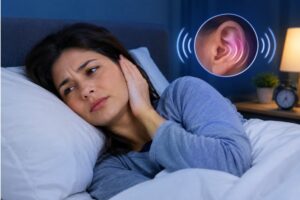
You may feel as though you are hearing through a wall, underwater, or with something covering your ears.
The amount of hearing change can vary. Some people notice only mild fullness, while others experience a more obvious reduction in hearing.
What Does Muffled Hearing from Congestion Feel Like?
Muffled hearing related to sinus or nasal congestion may occur in one or both ears. Common symptoms can include:
- Sounds seeming quieter or less clear
- A plugged or blocked feeling in the ear
- Ear pressure or fullness
- Popping or crackling sounds
- Difficulty hearing conversations clearly
- A feeling that the ear needs to pop
- Mild ear discomfort
- Changes in how your own voice sounds
- Temporary ringing or buzzing in the ear
You may also have symptoms related to the underlying cause, such as a stuffy nose, facial pressure, headache, sneezing, runny nose, or postnasal drip.
Why Does Sinus Pressure Affect Your Hearing?
The problem usually involves pressure regulation in the middle ear rather than the inner ear itself.
Sound waves travel through the ear canal and cause the eardrum to vibrate. Those vibrations then move through three tiny bones in the middle ear before reaching the inner ear.
For this process to work efficiently, the pressure in the middle ear needs to be properly balanced.
If the Eustachian tube becomes blocked or does not open normally, pressure can develop behind the eardrum. This may reduce how well the eardrum and middle ear structures transmit sound.
The result can be temporary conductive hearing loss, where sound has difficulty traveling efficiently through the outer or middle ear.
Common Causes of Sinus Pressure and Muffled Hearing
Several conditions can cause congestion or inflammation that affects the Eustachian tubes.
Colds
A common cold can cause swelling and mucus buildup in the nose and upper respiratory system. This inflammation may temporarily interfere with Eustachian tube function.
You might notice that your ears feel clogged during a cold or remain clogged for a short time after other symptoms begin improving.
Sinus Infections
Sinusitis can cause facial pressure, nasal congestion, drainage, and inflammation. The swelling associated with a sinus infection may also affect the areas around the Eustachian tubes.
As a result, some people experience ear pressure, popping, or muffled hearing along with their sinus symptoms.
Allergies
Seasonal and environmental allergies can cause ongoing nasal congestion and inflammation. If the tissues around the Eustachian tube openings become swollen, pressure may not equalize properly.
People with frequent allergy symptoms may notice recurring ear fullness or muffled hearing during certain times of the year.
Changes in Air Pressure
Flying, driving through mountains, or other rapid changes in altitude can make ear pressure more noticeable, especially if you are already congested.
If your Eustachian tubes are not working effectively, your ears may have difficulty adjusting to changes in outside air pressure.
How Long Does Muffled Hearing from Sinus Pressure Last?
The duration depends on what is causing the congestion and how quickly the Eustachian tubes return to normal function.
If your symptoms are related to a mild cold or temporary congestion, your hearing may gradually improve as the illness clears. Ear pressure or fullness can sometimes take longer to resolve than nasal symptoms.
Persistent muffled hearing should not automatically be blamed on your sinuses.
Earwax buildup, middle ear fluid, ear infections, eardrum problems, and different types of hearing loss can also cause sounds to seem muffled.
If your hearing does not return to normal, a professional evaluation can help determine what is happening.
What Can You Do for Muffled Hearing From Sinus Pressure?
If your muffled hearing is caused by mild congestion, treating or managing the underlying congestion may help your ears return to normal.
Some simple steps may include:
- Stay hydrated: Drinking enough fluids may help keep mucus thinner and easier to clear.
- Use saline nasal spray: Saline may help moisturize and clear nasal passages without medication.
- Try swallowing or yawning: These movements can encourage the Eustachian tubes to open and equalize pressure.
- Use a warm compress: A warm compress around the face may feel soothing when sinus pressure is present.
- Manage known allergies: If allergies are causing your symptoms, following the treatment plan recommended by your healthcare provider may help reduce congestion.
Avoid inserting cotton swabs or other objects into your ears in an attempt to clear the blockage. If the problem is behind the eardrum or related to Eustachian tube function, cleaning the ear canal will not solve it and could cause injury.
Before using decongestants or other medications, talk with your healthcare provider or pharmacist to make sure they are appropriate for you.
When Is Muffled Hearing More Than Sinus Pressure?
Not every clogged or muffled ear is caused by congestion.
Other possible causes include:
- Earwax buildup
- Middle ear infections
- Fluid behind the eardrum
- Eustachian tube dysfunction
- Damage to the eardrum
- Noise-related hearing loss
- Age-related hearing loss
- Inner ear conditions
This is why persistent or unexplained changes in hearing deserve attention.
If your nose feels clear but your hearing remains muffled, or if the hearing change continues after your sinus symptoms are gone, consider scheduling a hearing evaluation.
Can a Sinus Infection Cause Permanent Hearing Loss?
Hearing changes associated with congestion or middle ear pressure are often temporary. Hearing usually improves once normal pressure and middle ear function return.
However, you should not assume every hearing change is temporary simply because you also have sinus symptoms.
A hearing problem may happen at the same time as a cold, allergy flare, or sinus infection without being caused by it. Professional testing can help distinguish temporary conductive problems from other types of hearing loss.
When Should You See a Hearing Professional?
Consider having your hearing evaluated if:
- Muffled hearing continues after your congestion improves
- You frequently experience blocked or full ears
- You have ongoing difficulty understanding conversations
- One ear consistently hears differently from the other
- You experience persistent ringing in your ears
- You are unsure whether your hearing has returned to normal
A hearing evaluation can measure how well you hear different sounds and understand speech. It can also provide useful information about whether further medical evaluation may be appropriate.
Get Answers About Your Muffled Hearing in Atlanta
Sinus pressure can cause muffled hearing when congestion and inflammation interfere with normal Eustachian tube function. For many people, the hearing change is temporary and improves as the congestion clears.
However, persistent, recurring, one-sided, or unexplained muffled hearing may have another cause.
If you are concerned about a change in your hearing, The Hearing Center at Eye Consultants of Atlanta can help. A professional hearing evaluation can provide a clearer picture of your hearing and help determine the appropriate next steps.
Schedule an appointment today and get the answers you need about your hearing.
Related Posts

Contact Info
- Monday – Thursday : 8:00 am – 4:30 pm Friday : 8:00 am – 4:00 pm