

Blog
- September 18, 2026
Why Is One Ear Harder to Hear With Than the Other?
Have you noticed that you can hear better with one ear than the other? Maybe conversations sound clearer when someone is on one side of you, or you find yourself turning your head to use your better ear. This difference can be easy to ignore, especially when your overall hearing seems normal.
However, hearing that is noticeably different between your ears can have several possible causes. Some are temporary and easy to treat, while others may require a professional hearing evaluation.
Understanding why one ear may be harder to hear with can help you know when it is time to have your hearing checked.
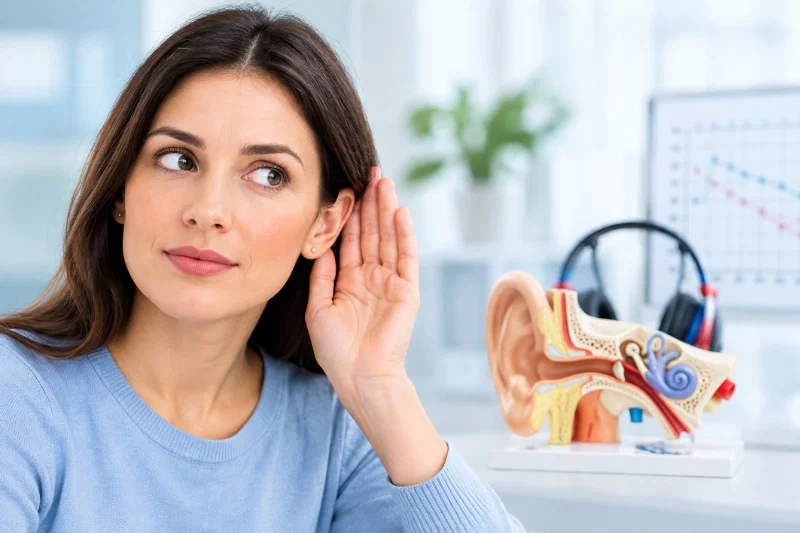
Is It Normal for One Ear to Hear Better Than the Other?
Your two ears work together to help your brain understand sounds, locate where sounds are coming from, and follow conversations, especially when there is background noise. When hearing is reduced in one ear, you may notice that certain listening situations become more difficult.
Different levels of hearing loss between the ears are fairly common. Hearing loss can affect one ear only, or both ears to different degrees. The cause may involve the outer ear, middle ear, inner ear, or the hearing nerve.
A hearing evaluation can determine whether there is a meaningful difference between your ears and help identify what may be causing it.
What Causes One Ear to Hear Worse Than the Other?
There are several reasons why one ear may not hear as well as the other. Some common possibilities include:
1. Earwax Buildup
Earwax helps protect the ear canal, but too much wax can block the passage of sound. If the blockage occurs mainly in one ear, you may suddenly notice that ear sounds muffled or blocked.
Earwax buildup can also cause a feeling of fullness, ringing or buzzing, and sometimes dizziness.
It is important to avoid putting cotton swabs or other objects deep into the ear because they can push wax farther into the ear canal or potentially cause injury.
2. Ear Infection
An ear infection can affect hearing in one ear. Inflammation or fluid in the middle ear can make sounds seem muffled or quieter.
You may also experience ear pain, pressure, itching, fever, or drainage depending on the type of infection. Hearing may improve after the underlying problem is treated.
3. Fluid or Congestion in the Middle Ear
A cold, allergies, or another condition that affects the Eustachian tube can cause fluid or pressure changes in the middle ear.
When sound cannot move normally through the middle ear, hearing may temporarily become less clear. This type of hearing problem is generally different from hearing loss caused by damage to the inner ear.
4. Noise Exposure
Repeated exposure to loud sounds can damage the sensitive structures of the inner ear. Although noise exposure can affect both ears, the amount of exposure may not always be identical on each side.
For example, people who regularly work around loud equipment or spend time near speakers may experience changes in hearing over time.
5. Age-Related Hearing Changes
Age-related hearing loss usually affects both ears, but the degree of hearing loss may not be exactly the same on each side.
You may notice that speech sounds less clear, especially in restaurants, family gatherings, or other places with background noise. Some people also notice that they need to turn up the television or frequently ask others to repeat themselves.
6. Problems Affecting the Inner Ear or Hearing Nerve
Sometimes the difference between ears is related to the inner ear or the nerve pathways that carry sound information to the brain.
Sensorineural hearing loss can result from factors such as aging, loud noise exposure, illness, head trauma, certain medications, or genetic factors.
When hearing loss is significantly worse in one ear, a professional evaluation is important because the cause cannot always be identified from symptoms alone.
Why Does One Ear Sometimes Feel Blocked?
If one ear suddenly feels blocked or sounds muffled, it does not always mean you have permanent hearing loss.
Earwax, congestion, fluid, or an ear infection can all make an ear feel plugged. Changes in pressure during air travel can also affect how your ears feel and how clearly you hear.
However, it is important not to assume that a sudden change is simply caused by congestion or earwax. Sudden inner-ear hearing loss can also cause a rapid decrease in hearing in one ear.
When Should You See a Hearing Professional?
Consider scheduling a hearing evaluation if:
- One ear consistently seems weaker than the other
- You frequently ask people to repeat themselves
- Speech sounds muffled or unclear
- You have difficulty hearing in restaurants or noisy environments
- You notice ringing or buzzing in one ear
- One ear feels blocked for an extended period
- You have trouble identifying where sounds are coming from
- Your hearing has gradually changed
- Hearing problems are affecting conversations or daily activities
A hearing test can measure how well each ear detects different sounds and determine whether there is a significant difference between them.
What Happens During a Hearing Evaluation?
A professional hearing evaluation can provide a much clearer picture of what is happening than simply testing your hearing at home.
Depending on your symptoms, a hearing professional may examine your ears and perform different hearing tests. These tests can help determine the type and degree of hearing loss in each ear.
The results can show whether your hearing is similar in both ears or whether one ear is performing differently. The information can then be used to determine appropriate next steps.
ATL Hearing provides comprehensive hearing evaluations and testing designed to identify hearing concerns and develop personalized care.
What If One Ear Has Much More Hearing Loss?
Treatment depends on the cause and severity of the hearing difference.
If the problem is related to earwax, an infection, or another condition affecting the outer or middle ear, treating the underlying issue may improve hearing.
For permanent hearing loss, hearing aids or other hearing technology may be considered depending on the individual’s hearing results and needs. In cases of significant hearing loss in one ear, specialized options may also be available.
The goal is not simply to make sounds louder. It is to help you hear comfortably and understand speech more effectively in your everyday environment.
What About Sudden Hearing Loss in One Ear?
Sudden hearing loss should be taken seriously.
Sudden sensorineural hearing loss can develop rapidly, sometimes within hours or a few days, and it frequently affects only one ear. It may occur with a feeling of fullness, ringing in the ear, or dizziness.
Because treatment may be time sensitive, you should seek medical attention promptly if you experience a sudden unexplained loss of hearing in one ear. Do not simply wait to see if it improves on its own.
A sudden change can sometimes be caused by something as simple as earwax, but it is important for a healthcare professional to determine the actual cause.
Do Not Ignore a Difference Between Your Ears
If one ear is harder to hear with than the other, there can be many possible causes. Earwax, infections, congestion, noise exposure, age-related changes, and inner-ear conditions can all affect hearing. Some causes may be temporary, while others may require ongoing care.
If you have noticed a difference in your hearing, a professional hearing evaluation can help identify the cause and determine the right next steps. The Hearing Center at Eye Consultants of Atlanta is committed to helping patients understand their hearing health and explore appropriate hearing care based on their individual needs.
If one ear does not seem to hear as well as the other, do not ignore the change. Schedule a hearing evaluation with The Hearing Center at Eye Consultants of Atlanta to better understand your hearing and take the next step toward clearer communication and better hearing.
Related Posts


Contact Info
- Monday – Thursday : 8:00 am – 4:30 pm Friday : 8:00 am – 4:00 pm