

Blog
Real Ear Measurement Guide for Hearing Aids
Real Ear Measurement is a proven method used during hearing aid fitting to ensure the device delivers the right sound inside your ear. It improves accuracy, comfort, and speech clarity for better hearing outcomes.
- April 6, 2026
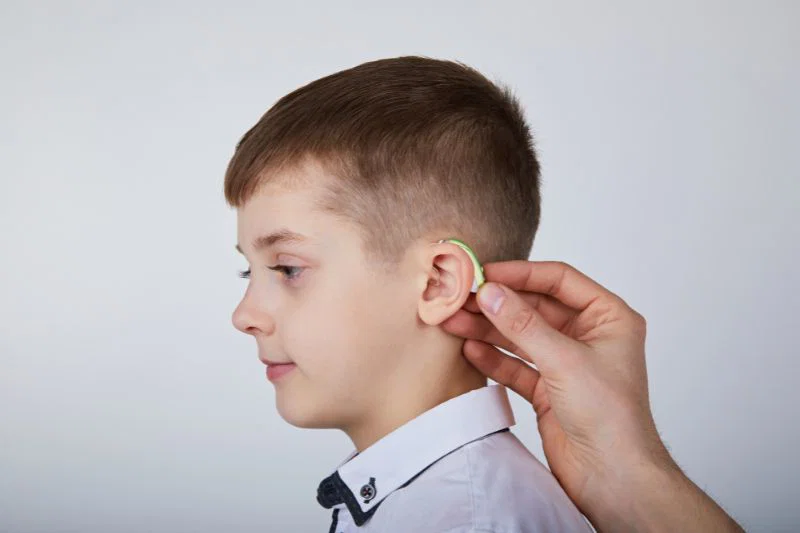
What Is Real Ear Measurement?
Real Ear Measurement is a clinical test used to check how a hearing aid performs inside your ear canal. It is sometimes called real ear verification or hearing aid verification.
During this test, a very thin and soft tube is placed inside your ear. This tube measures the sound levels produced by your hearing aid close to your eardrum. The goal is to see exactly how much sound is reaching your ear and whether it matches your hearing needs.
This process gives real and accurate data instead of relying only on software estimates. Every ear is different, so this step helps ensure your hearing aid is truly customized for you.
Why Real Ear Measurement Is Important
Many hearing aid fittings rely only on manufacturer software. While this may seem convenient, it often leads to inaccurate results. These default settings are based on average ear models, not your individual anatomy.
This means two people with the same hearing test can still experience very different results with the same hearing aid settings.
Real Ear Measurement removes this guesswork. It allows your hearing care provider to verify that your hearing aid is meeting your exact prescription inside your ear, not just on a computer screen.
Research has consistently shown that patients fitted using Real Ear Measurement experience better speech understanding and overall satisfaction compared to those fitted using default settings.
For patients, this translates into something very simple but powerful: hearing conversations more clearly and with less effort.
Real Ear Measurement vs First Fit Settings
A common alternative to Real Ear Measurement is what is called a “first fit.” This is when the hearing aid is programmed using manufacturer software without further testing inside the ear.
While first fit is quick, it has limitations.
Here is how the two approaches differ:
First Fit Approach
- Based on average ear assumptions
- No direct measurement inside your ear
- May miss target sound levels
- Results can vary from person to person
Real Ear Measurement
- Based on actual sound inside your ear
- Uses real time data for adjustments
- Helps match hearing aid output to prescription
- More consistent and reliable results
Studies comparing these methods show that Real Ear Measurement provides a closer match to target and better listening outcomes, especially for speech understanding
How Real Ear Measurement Works
The process is straightforward and usually takes place during your hearing aid fitting appointment.
Here is a simple breakdown:
- A thin probe tube is placed in your ear canal
- You sit facing a speaker at a fixed distance
- Different sound levels are played through the speaker
- The probe measures sound near your eardrum
- Results are compared to your hearing prescription
- Adjustments are made to your hearing aid
The goal is to make sure your hearing aid delivers the right amount of sound across different frequencies and volumes.
Step by Step Process Explained
To get accurate results, hearing care providers follow a structured process. While it may sound technical, each step plays an important role.
1. Preparing the Testing Environment: The room needs to be quiet and set up properly. The speaker is placed at a specific distance to avoid sound reflections and ensure consistent results.
2. Reviewing Your Hearing Test: Your audiogram is reviewed before testing begins. This helps determine the type and level of hearing loss and guides the fitting targets.
3. Selecting a Fitting Target: A fitting formula such as NAL or DSL is chosen. These are evidence based methods used to define how much amplification you need.
4. Calibrating the Probe Tube: Before inserting the probe, the system is calibrated. This step ensures that the measurements will be accurate.
5. Placing the Probe Tube: The probe is carefully positioned inside the ear canal. Proper placement is critical for reliable results.
6. Measuring Natural Ear Response: A measurement is taken without the hearing aid to understand how your ear naturally processes sound.
7. Measuring With Hearing Aid: The hearing aid is turned on and tested at different sound levels. Adjustments are made until the output aligns with your prescription.
Key Measurements Used in the Process
During Real Ear Measurement, several types of readings may be taken to understand different aspects of hearing aid performance.
- REUG (Real Ear Unaided Gain): Measures how your ear responds to sound without amplification
- REOG (Real Ear Occluded Gain): Measures sound when the ear is blocked by a hearing aid that is turned off
- REAR (Real Ear Aided Response): Measures how your hearing aid performs when it is turned on
These measurements help create a complete picture of how sound behaves in your ear.
Benefits You May Notice After Real Ear Measurement
Real Ear Measurement is not just about numbers on a screen. It directly impacts how you hear in everyday life.
Many patients report improvements such as:
- Clearer conversations, especially in quiet settings
- More natural sound quality
- Less listening fatigue throughout the day
- Better balance between soft and loud sounds
- Increased confidence in using hearing aids
Because the fitting is based on real data, the results tend to feel more accurate and comfortable.
When Real Ear Measurement Might Not Be Performed
Although this test is safe for most people, there are a few situations where it may need to be postponed.
These include:
- Excessive ear wax blocking the ear canal
- Ear infections or discharge
- Significant ear pain
- Certain conditions affecting the eardrum
In such cases, the issue is usually treated first before proceeding with the measurement.
What Happens After the Measurement?
Real Ear Measurement is an important step, but it is not the final step in the hearing process.
After the test, your provider may:
- Make fine adjustments based on your feedback
- Guide you on how to use and care for your hearing aids
- Schedule follow up visits to monitor progress
Hearing is a gradual adaptation process, and follow ups help ensure long term success.
Real Ear Measurement and Hearing Aid Success
One important concept to understand is the difference between verification and validation.
- Verification confirms that the hearing aid is set correctly
- Validation checks how well you hear in real life situations
Real Ear Measurement is part of verification. It ensures that your device is delivering sound as intended. Validation happens later through your experience and feedback.
Both are essential for achieving the best results.
Final Thoughts
Real Ear Measurement plays a key role in modern hearing care. It turns hearing aid fitting from an estimate into a precise process based on real data.
Without it, hearing aids may still work, but they may not perform at their full potential. With it, you get a more accurate, comfortable, and personalized hearing experience.
If you are considering hearing aids or want to improve your current fitting, understanding this process can help you make more informed decisions.
FAQs
Real Ear Measurement is a test used during hearing aid fitting to measure how sound behaves inside your ear canal. It uses a small probe tube to check if your hearing aid is delivering the correct sound levels based on your hearing loss.
While not every clinic performs it, Real Ear Measurement is considered a best practice in hearing care. It provides a more accurate fitting compared to basic programming and helps ensure you get the maximum benefit from your hearing aids.
The test is usually completed within 15 to 30 minutes as part of your hearing aid fitting appointment. The exact time may vary depending on adjustments and individual hearing needs.
No, Real Ear Measurement is generally comfortable and safe. The probe tube used is very thin and flexible, and most patients only feel slight awareness during placement.
Yes, it can significantly improve clarity by ensuring your hearing aid matches your prescription across different sound levels. Many patients notice better understanding of speech after proper verification.
Real Ear Measurement is recommended for most hearing aid users, especially first time users or those who are not satisfied with their current hearing aid performance.
After the test, your provider may fine tune your hearing aid based on the results and your feedback. You may also have follow up visits to ensure your hearing continues to improve over time.
Real Ear Measurement is very safe, but it may be avoided temporarily if there is ear infection, excessive wax, or pain in the ear. In such cases, the issue is treated first before performing the test.
Related Posts

Contact Info
- Monday – Thursday : 8:00 am – 4:30 pm Friday : 8:00 am – 4:00 pm