
Auditory Training – Lace AI Pro
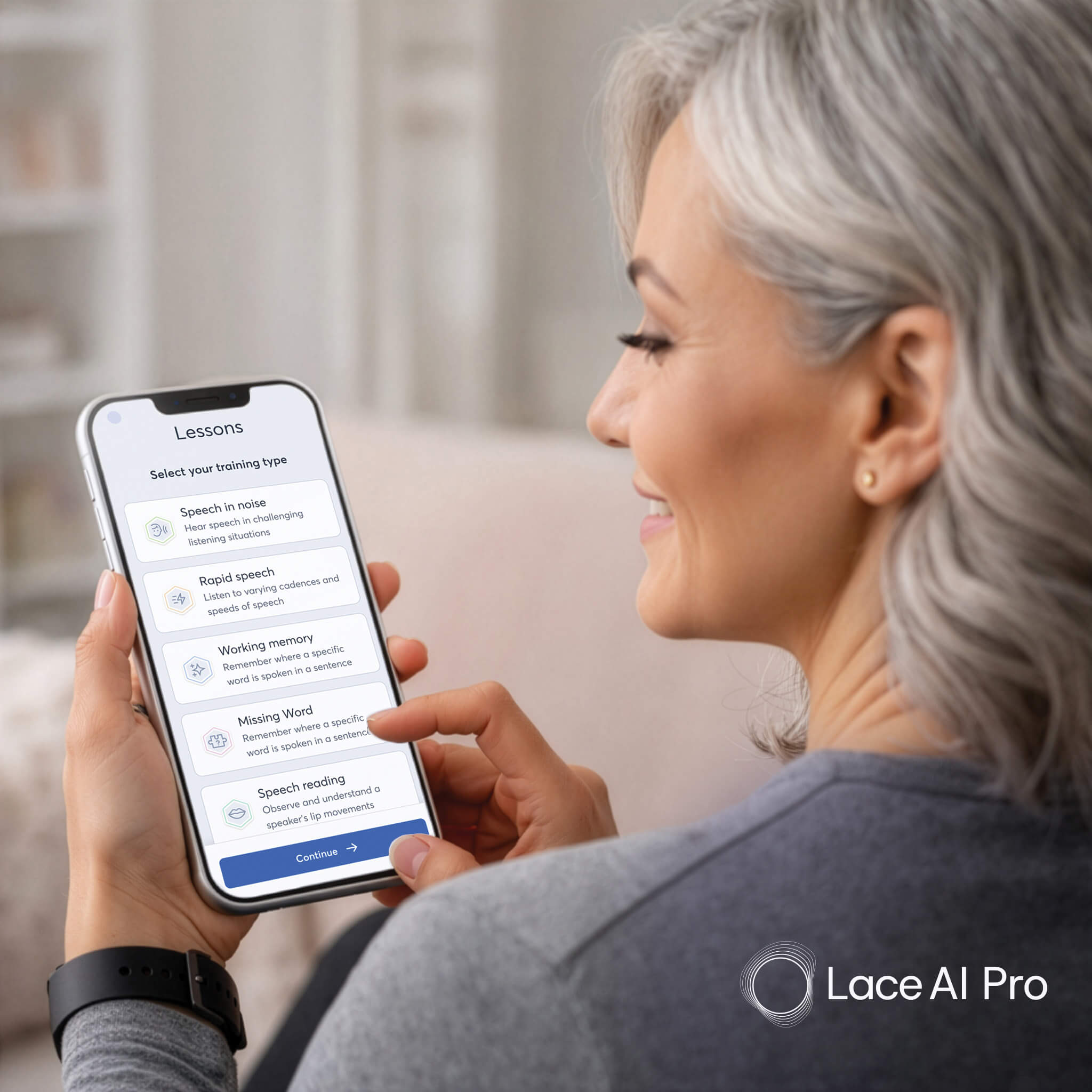
Auditory Training with Lace AI Pro
Auditory training helps your brain process sound into meaning.
We know that the hearing aid technology we are fitting our patients with is fantastic, but we still see areas of improvement where our patients struggle, such as difficulty hearing in background noise, difficulty hearing one person in a crowd, and difficulty keeping up with fast talkers! The areas that patients have difficulty all relate back to the way the brain uses listening pathways, attention, memory and audiovisual cues to make sense of what is heard. It isn’t that our patients can’t hear the sound. It’s difficulty sorting the sound.
While hearing aids can help to detect sounds and make speech audible, they do not affect other important factors in our brain’s ability to understand, like listening, communication and comprehension. As part of normal healthy aging, our brain changes.
Patients often report that their hearing aids do not work, or they do not see any benefit when they wear them. People think hearing aids will fix their problems hearing in background noise, but if normal hearing people also struggle in background noise, we know the hearing loss is not the problem. The problem is the normal changes in the brain as we age.
During the natural aging process, our ear-to-brain connection weakens due to hearing loss, and our processing speed slows down. We struggle to follow rapid conversations. While our ear is what hears and transmits the sound, ultimately, we understand that signal with our brains. To remember something, we must hear it clearly. Since we do not hear it clearly and we cannot “fill in the gaps” with rapid speech, our working memory is impacted. Memory can only be as clear as the signal that we hear and having a hearing loss affects our memory storage. The more background noise, the more our working memory suffers.
Auditory training is recommended to help make the most of your hearing aid investment and to improve your communication skills.
Lace AI Pro targets and improves five key areas of the brain involved in listening and understanding. It’s auditory training with purpose – strengthening how our brains process sound.
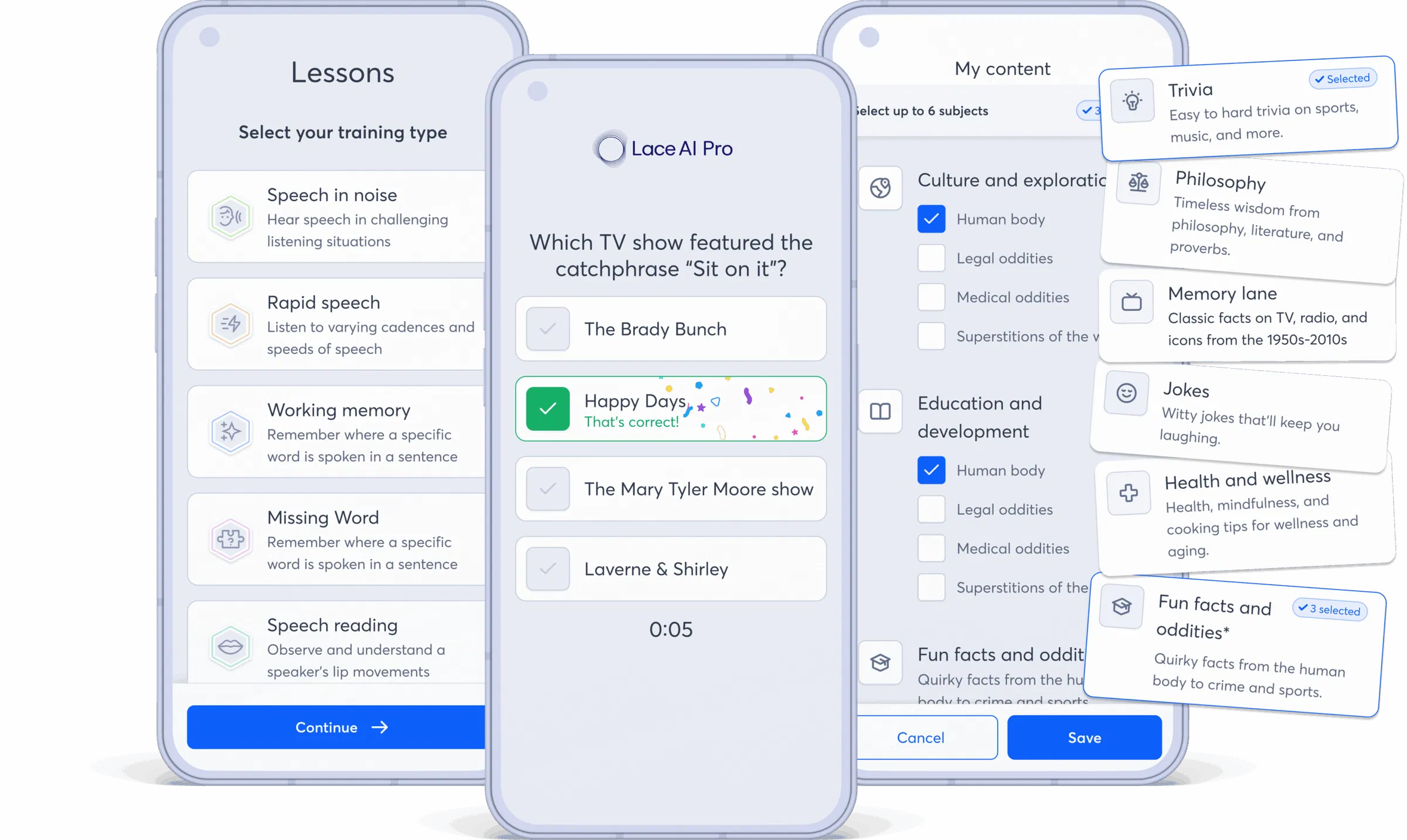
Training focuses on:
- Speech in Noise – helps with signal processing so patients hear better in noisy environments
- Rapid Speech – improves processing speed so listeners keep up, even in conversations with fast talkers
- Working Memory – boosts attention and retention which are vital for meaningful conversations
- Missing Word – strengthens deductive reasoning – helping grasp full meaning from partial input
- Speech Reading – builds visual integration skills to help patients listening comprehension
Think of auditory training as physical therapy for your brain. Simply putting hearing aids in isn’t enough. Just like you need to do physical therapy after a knee replacement, these exercises are needed while wearing your hearing aids. Putting in effort and exercise will improve your brain’s ability to fill in the gaps you have been missing.
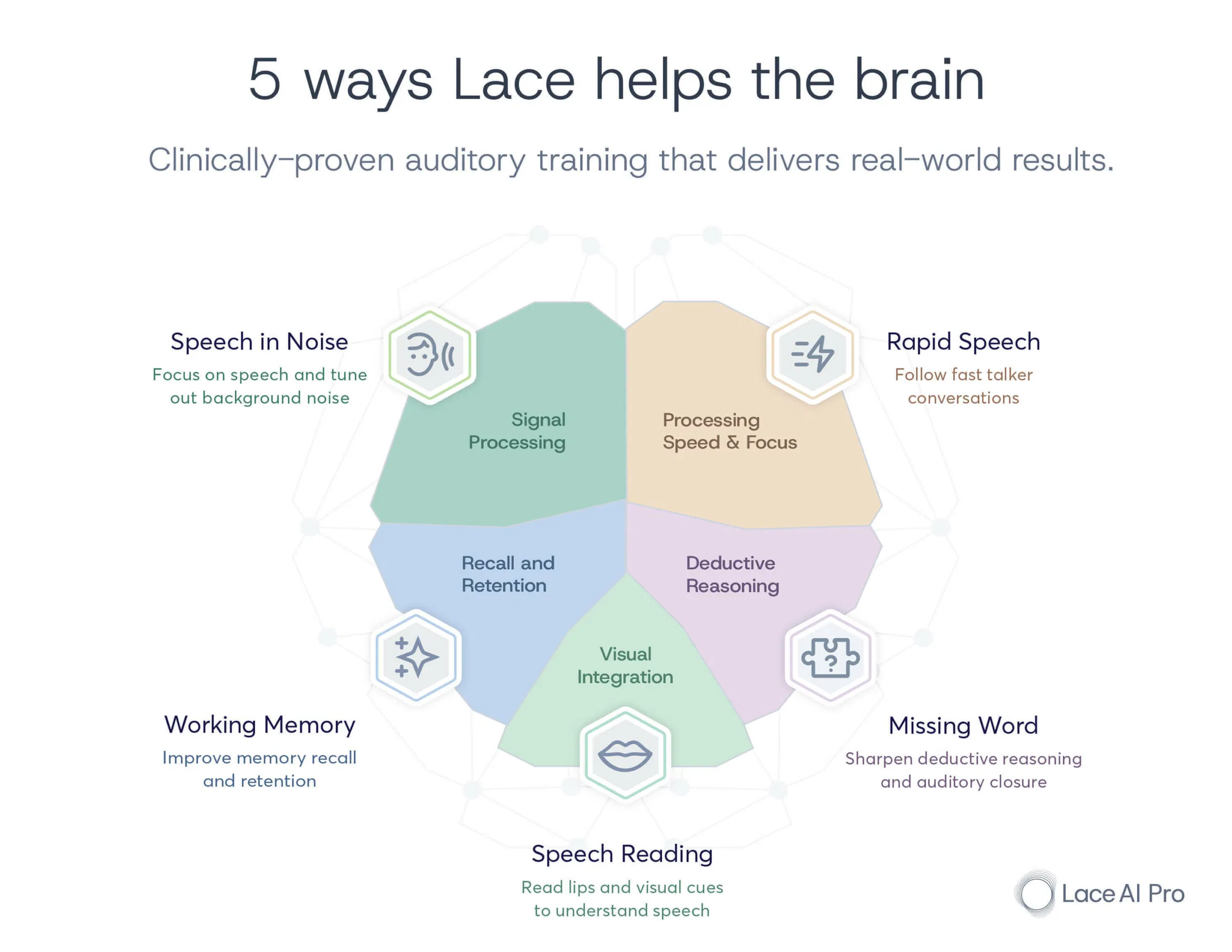

Enrolling in Lace AI Pro is simple:
- Contact our office via phone, email or text and we’ll get you enrolled.
- Just 15 minutes a day is enough to retrain the brain to process sound more clearly.
- You can do the exercises on your smartphone, tablet or desktop computer (or rotate between all 3).
- It’s a one-time purchase of $249 with lifetime access – no subscriptions.
- You can track your progress and celebrate your improvements! Your provider can also discuss your progress at your follow up appointments and make additional recommendations to improve any areas of weakness.
Contact Info
- Monday – Thursday : 8:00 am – 4:30 pm Friday : 8:00 am – 4:00 pm